Why Are Butterflies Important?
By Hayley Ames; Updated April 25, 2017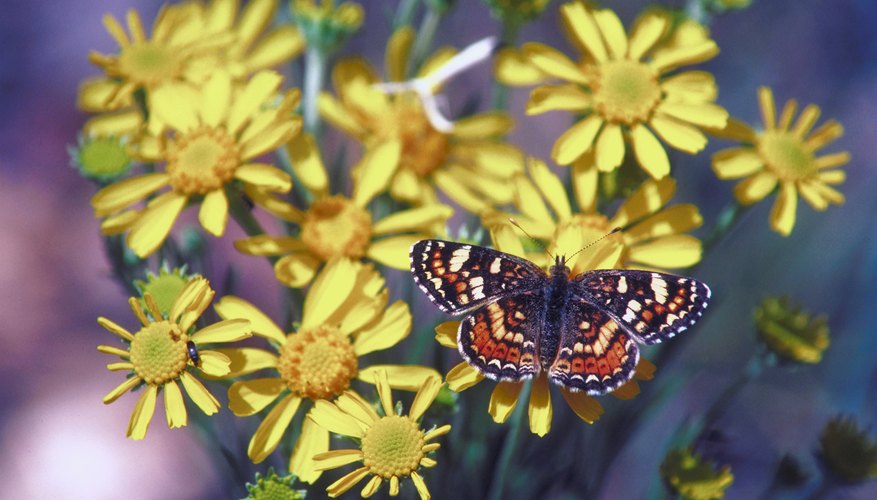
NA/AbleStock.com/Getty Images
Butterflies are a diverse group of insects, containing around 20,000 different species. North America is home to more than 700 of these species. Butterflies are aesthetically pleasing and few species cause any damage to commercial plants. Butterflies contribute to thriving ecosystems and can indicate the state of an ecosystem’s health.
Pollination
Butterflies play an important role in pollinating flowers, particularly flowers that have a strong scent, are red or yellow in color and produce a large amount of nectar. Nectar is an important component of a butterfly’s diet. Although butterflies pollinate flowers less efficiently than bees, their role is still useful. Pollen collects on the butterfly’s body as it is feeding on a flower’s nectar. As the butterfly moves on to a new flower, it carries the pollen with it.
Important Components of a Thriving Ecosystem
An abundance of butterflies is often an indication that an ecosystem is thriving. This is due to the fact that butterflies are an important component of a food chain, as predators and prey. Adult butterflies and caterpillars are an important source of food for other animals such as bats and birds. Along with nectar, butterflies eat a variety of plants. Some species also provide a natural of form of pest control. For example, the harvester butterfly eats aphids while it is in its caterpillar form.


